Xbox is in danger. Will Microsoft fix it or kill it?
Today, we’re talking about the future of Xbox. Phil Spencer, a two–time Decoder guest who’s led Xbox for more than a decade, retired last week.
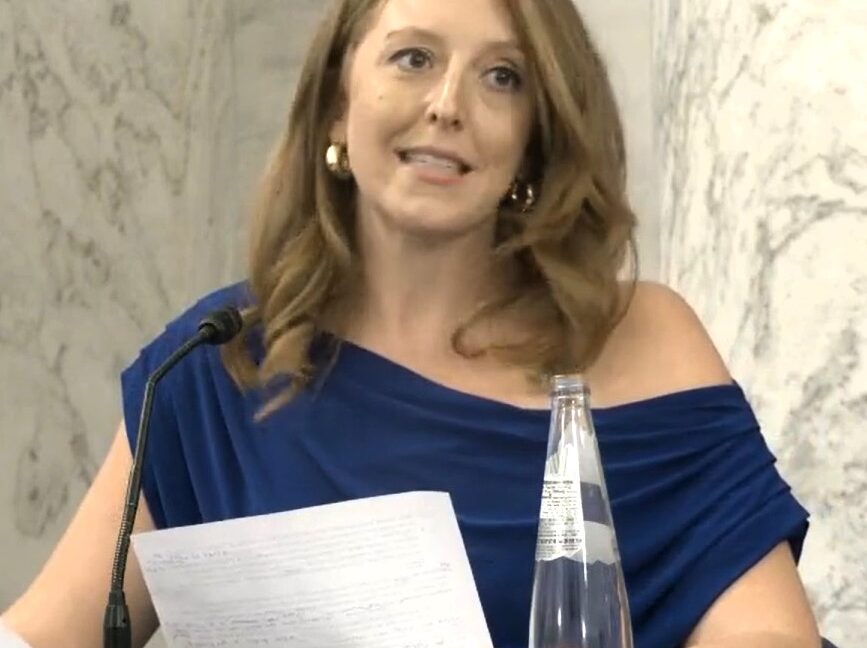
But in a shocking twist, his deputy and long-assumed successor, Sarah Bond, is also out too, and the Xbox division is now in the hands of Asha Sharma, one of Microsoft’s AI executives with no prior game industry experience. It’s a major leadership transition that suggests Microsoft wants to make serious changes to its gaming division, which owns franchises like Halo, Call of Duty, and Minecraft.
There is no better person to talk to about all of this than Tom Warren, a senior editor here at The Verge and author of the excellent Notepad newsletter. Tom is actually on parental leave right now, but Microsoft has a longstanding habit of disrupting his well-earned time off with major news. So, Tom was gracious enough to come on the show after he published a major scoop about what exactly went down at Xbox this past week.
There is a lot to say about Xbox: The story of the console and Microsoft Gaming is a complicated one, with a lot of twists and turns since it made its big splash in the video game industry 25 years ago. Yet for a majority of that time, it’s been stuck in third place, behind Nintendo and PlayStation. That’s a surprising thing to say for a division of a company worth trillions of dollars that also owns some of the most celebrated gaming properties in all of entertainment.
Verge subscribers, don’t forget you get exclusive access to ad-free Decoder wherever you get your podcasts. Head here. Not a subscriber? You can sign up here.
So Phil Spencer, who started at Microsoft in the late 1980s and took charge of Xbox in 2014, was given the job of trying to turn the division around. Since then, Spencer has tried numerous moves: the Netflix-style Game Pass subscription service; a major push into cloud gaming; buying Activision Blizzard King, the maker of Warcraft and Candy Crush; and many, many different iterations of Xbox hardware. As of last year, there are even plans to bring Halo to PlayStation — something game industry insiders thought was basically impossible just five years ago.
But as you’ll hear Tom explain, the game industry has been changing faster than Xbox has been able to transform itself, and almost none of Spencer’s strategies have really clicked. Xbox is still far behind Nintendo and PlayStation, and on PC, it still stands in the shadow of Valve, which runs the dominant Steam store and now makes the Steam Deck handheld. Microsoft has spent tens of billions of dollars trying to acquire its way to a stronger position against the rise of Fortnite and Roblox, mobile giants like Tencent, and a zero-sum war for attention dominated by apps like YouTube, Instagram, and TikTok. And yet the company has very little to show for all of that.
Today, Spencer’s grand vision of 100 million Game Pass subscribers streaming Xbox games to whatever screen they want using the cloud still feels out of reach. But, as Tom says, it’s not lost forever — Xbox is far from dead, and there is still hope yet that new leadership can take some big swings and make something happen again.
Okay: Verge senior reporter Tom Warren on the future of Xbox. Here we go.
This interview has been lightly edited for length and clarity.
Tom Warren, you’re a senior reporter at The Verge. You’re currently out on paternity leave, but Microsoft just brought you back.
Yep. This happens every time I take a vacation or leave. Microsoft decides, “We’re going to do something massive and ruin Tom’s life.”
Just punishment for all of the scoops you’ve dropped on this company over the years. So this week, as you were playing with your beautiful new baby, Microsoft initiated a major shakeup at Xbox, something we’ve seen coming for a little bit, but maybe not on this scale or this magnitude. Describe what happened at Xbox this week.
Phil Spencer, the longtime CEO of Microsoft Gaming, technically, but Xbox chief is what he’s known as, is retiring, so he is leaving Microsoft. Sarah Bond, the Xbox president, is also leaving Microsoft, and then they’re actually promoting Asha Sharma, from the CoreAI side of Microsoft, to the CEO of Microsoft Gaming.
So she’s replacing Phil Spencer, essentially. So it’s big news, a big shakeup, should we say, of Xbox. I think with Phil Spencer, it’s been a long time coming, right? I think Xbox fans have expected that retirement, but perhaps not so much Sarah Bond’s leaving.
And this is, I think, the shakeup, right? We knew Phil was going to retire. He’d been messaging that for some time. He’s been there for a long time. He’s a Microsoft lifer, really. Phil’s been on this show before, and we’re going to run some clips from his past interviews on Decoder, because I want to get your take on what happened between those interviews and now.
At a very high level, we knew Phil was going. Is it that everyone expected Sarah to be his successor, and that didn’t happen, and that’s the surprise here?
I think there are two surprises, right? One is obviously that Sarah wasn’t named Xbox chief and that Asha is the successor, because that was a quiet surprise and a surprise higher, really. But yeah, Sarah has always been the number two. She’s always traveled with Phil and always been the face of Xbox over the past couple of years as Phil has… I’d say he’s stepped back a little bit publicly since the Activision Blizzard acquisition.
So Sarah’s become the face of Xbox during that time, and she took over the platform work, the hardware work. So whenever there was any mention of the next-gen Xbox, it was Sarah who would come out and talk about it and not Phil. So that’s a change in itself, right, because it’s usually Phil. So I think everyone just thought, “Okay, well she’s being prepped to be Phil’s replacement eventually, whether it be a couple of years, five years, whatever,” and it didn’t happen.
Behind the scenes, I know that Xbox fans had heard, and expected, that this was going to happen, that Sarah Bond would be the heir apparent. But for a good year or so, I’ve been hearing different things about Sarah Bond, different from what perhaps the public perception is of her. So to me, it wasn’t a surprise. I was not surprised to see her not named, but I think it was more of a surprise to see Asha named. That was a surprise to me.
I know Asha a little bit. I’ve spoken to her a few times, but she’s like a non-gamer. She’s very straight about that and honest about it, but not that that really matters, I don’t think, to be a CEO, really, to be honest. But to Xbox fans and that gaming segment, if they see a non-gamer, it’s like… Particularly with Xbox, I think, because Phil has instilled that over the years, so they’ve come to that expectation. So that was the surprise of it, but I don’t think Sarah Bond was a surprise to me.
I want to come to Asha, the new leadership, and particularly the Microsoft AI of it all, because that seems like an important piece of the puzzle. I just want to stick with Phil and Sarah for one more second. There’s the reporting you have done about Sarah personally, and her skills as manager and potentially CEO, and then there’s Phil and the strategy he pursued for Xbox and Microsoft Gaming.
A huge part of that strategy is making Microsoft Gaming as big as it is, bigger than Xbox, acquiring Activision Blizzard King, and doing all the other acquisitions of the studios they’ve done. I look at this, and I say, “Well, it doesn’t matter if Sarah was the best manager or the worst manager. The strategy that she was a part of failed.”
I see this, and I say, “Okay, if I’m Satya Nadella,” or more importantly, “Amy Hood, the CFO of Microsoft, and we’ve done some of the biggest acquisitions in history, and certainly the biggest acquisitions in Microsoft history. None of this came to anything. We gotta reboot this whole thing.” Does that feel as important inside Microsoft as maybe Sarah wasn’t the right person?
It’s a couple of things. Obviously, Microsoft Gaming has ballooned now, right, because it’s got Bethesda, and Activision Blizzard has made it bigger than ever before. And then you’ve got this tension of Microsoft: the corporate Microsoft of Satya Nadella and Amy Hood, putting the pressure on that new division to return the money that they’ve invested into this project, essentially, through profit margins.
So they’ve cranked that pressure up over the past couple of years, and it forced Phil, Sarah, and everyone under them to then respond. They’ve done these studio closures, they’ve done cuts, they’ve done price increases. They’ve tried to accelerate getting more people using export services, essentially.
That became the strategy, like, “Okay, we need to get to TVs, we need to get to mobile,” and all this stuff. And there was a lot of, I guess, trying to rush that, it felt like, and forgetting that the console was their base of building up Game Pass and their base of taking those people and perhaps moving them elsewhere, and user acquisition, growth. And it just feels like they tried to rush that, and they did the “This is an Xbox” campaign, which was just super strange. It was trying to say that the phone was an Xbox, and it was borne out of the idea that they needed to speed up profitability. They needed to get more revenue, get more growth, and improve those margins, essentially.
So when you’re trying to pin blame on whoever it is, it comes from the top. Satya and Amy are pushing these margins, and I think they’re slightly unrealistic in the context of gaming. They’re not the margins that Sony has, for example. They’ve put the pressure on. Phil, I think, has stepped away a little bit over the last couple of years, so not so laser-focused on Xbox, and then that’s allowed Sarah to have a lot of power over Xbox and accumulate marketing power and do the “This is an Xbox” campaign, in her own org.
It just hasn’t gone well. It hasn’t gone well for consoles, even if you argue that Microsoft perhaps doesn’t care about selling consoles, which maybe they don’t. I think they probably thought that they could replace them with cloud and mobile a little bit quicker.
Well, so actually this is my big question. And this is, again, the reporting you have about Sarah as a manager and a leader, but then well, it’s Microsoft. All Satya and Amy care about is mobile and cloud. That’s not even the AI part of it. This is a business that runs huge cloud services in Azure and needs a new foothold in mobile. And they basically bought Candy Crush to get a bunch of mobile revenue, and of course, that’s what they wanted to do.
It feels like the decision is not so much about Phil Spencer and Sarah Bond. It’s “this whole strategy failed, and now we’re going to try a new one,” and I’m just curious if you have insight into the balance. How much is it “The strategy failed, we just need a new regime,” versus, “We need a new strategy, and Sarah specifically cannot execute a new strategy”?
I don’t think they’re going to change the strategy all that much, because the strategy makes sense in a way. You want to get to mobile, you want to get to cloud, and that’s how you’re going to get more users ultimately into your system without selling enough consoles, essentially. So I don’t think the strategy is terrible, but I think the execution has been. Over the past couple of years, I think that’s been the problem predominantly, which is the execution of the strategy. The messaging publicly has been pretty bad. I think it’s more of a regime change that’s needed to bring some element of people who understand user acquisition. And I think that’s where Asha is coming in.
Let’s talk about Xbox strategy as a whole, because if you’re saying it’s not changing, it’s worth taking a beat to just understand what the goal has been. And I would say that since 2017, Phil Spencer has been very clear that where he wants to get to is everyone is subscribed to Game Pass, you can play Game Pass games anywhere because they’re streaming from the cloud, and we’re going to get out of this race of console generations and exclusives. Because they essentially lost to Sony, permanently lost to Sony. There was no coming back with a new generation.
Did that work? I mean, I think we know now there’s executive turnover; it didn’t work. But did it ever work? Was there ever a glimmer of it working?
So, going back to where it all started, this mess with Xbox essentially is the Xbox One, when they failed that sort of era. And what happened at that time is the PlayStation-
This is 2013; this is over a decade ago.
This is 2013, yeah. And that led up to kind of 2017 and the launch of xCloud and all that sort of stuff. But going back to that sort of era, they lost that generation, and it was a huge cost to them, because that was the generation that people started their digital libraries that weren’t on a PC. People on PlayStation have built up those libraries. They’re not willing to move away from those libraries now. They knew they’d lost that real key generation.
So the response was, “Let’s do Game Pass because that will allow people to bring their games to different devices, this whole cloud vision, mobile, et cetera.” I think that was the only kind of response they could give, and it was designed to be consumer-friendly, right? You got day one games that they published immediately, so they took a bit of a risk. It was quite a bold move, really, to do that. And still, Sony doesn’t do day one games, for example. So they took a risk.
The problem with Game Pass is that they’ve had to fuel it with content, right? They’ve done all these acquisitions, Bethesda, Activision, and there are nameless others as well. But the problem then with Game Pass is that you’re giving your games away with a subscription, but you need to scale that up, right? It needs to hit a certain number of million people that you’ve got that concurrent revenue every quarter, and you can rely on where it isn’t cannibalizing or eating into the traditional sales of those games that fuel the costs for developing those games. And frankly, it’s just getting more complicated to develop games these days, and a lot more expensive.
So they’ve had those issues with Game Pass, and ultimately, I think the strategy was to respond to try and get that growth, to try and scale up this idea of Xbox on all devices. And the way they put it was “3 billion gamers,” right? That was the launch of xCloud. And remember, xCloud, now it’s called Xbox Cloud Gaming, was originally a mobile play. So it was literally to try and get people into the idea of playing via streaming on mobile with these attachments to your phone essentially.
It’s worth noting that they ran into Apple’s App Store rules. They were not able to do this in a way that actually worked.
Exactly. So they hit a bunch of regulatory hurdles. They had to launch it as a xbox.com/play in your browser, so you couldn’t get an app or anything like that. That completely knocked them back, right? Even when they were trying to playtest it, Apple was on the test flight, saying, “No, you have to change this.” They were very restricted in what they could do. So that kind of put their strategy back. Now, who do you blame for that?
[Laughs] I think you can blame Apple in a very significant way. There are pretty major antitrust ramifications of that that Apple’s still feeling.
Right. And then fast-forward from that point, from launching xCloud and having all those issues, to a couple of years ago, and they’re still trying to get all of that resolved, right? They still want this cloud gaming app. But they’re also now trying to get a store in there, essentially, is the idea. They’re going to have an Xbox mobile store.
So we’ve moved on from having an Xbox Cloud Gaming app to something more ambitious now: “We want to do a store, we want to sell content in there directly to people.” And there was the promise that the app is going to arrive from both Phil and Sarah, to be fair. But then Sarah promised it was going to launch in a month in an interview, and that was two years ago, I’d say, and it hasn’t happened.
A lot of that idea of going for mobile recently and trying to do this cloud store thing has just been over-promising and under-delivering, and relying on regulatory change that just hasn’t come. Or it’s come, and whether it be Google or Apple, they’ve appealed it, right? They’ve just pushed it down for so many more months.
So yeah, so they’ve had all these hurdles with this strategy, but I think ultimately, Game Pass has a problem where it fundamentally will eat into those margins of studios. And if they can’t scale it up, then they have to increase the cost of it. So again, we saw that last year, prices are now up 50 percent for Game Pass Ultimate.
They’ve been doing all these things where they respond to this strategy with a goal of either increasing the revenues or scaling it up, and it just hasn’t been going smoothly, especially — let’s be honest — over the past couple of years.
When Phil Spencer was on the show in 2022, I asked him about this vision that the future of Xbox is Netflix. Here’s what he had to say:
NILAY PATEL: Then there’s the other side, which is, “Man, it would be really cool if everyone just paid us $15 a month all of the time,” and the games come out and everyone’s happy. That base of revenue is recurring and is a little more stable than hits and console generations. Is that the move? That seems like where you have been building for a long time, but it’s harder to get there than maybe anyone anticipated.
PHIL SPENCER: We don’t have this vision of everybody paying us $15 a month. We think the subscription is an interesting business model for certain kinds of games and for certain customers. I really see it as diversifying how people build their library of games or how creators reach the customers they want to reach with the content that they build. It will always be part of the business, in my view. I think people buying and owning their games will be an important part of the business for years and years to come.
Free-to-play games with post-sale monetization, add-ons, and battle passes that those teams have figured out will be a significant, probably majority of the business for a decade plus. Subscription will augment that. Really, that’s the extent of it. We are not building towards a world where subscription is in any way dominant or predominant on our platform. We think for certain customers in certain markets with certain economic livelihoods, where they are managing their cash flows, subscriptions can be very valuable.
Even as Phil was saying that to me, I was thinking, “I don’t believe you, but you’ve gone all in on all of these moves to get recurring revenue.” And we were having that conversation in the context of them buying Activision, and Candy Crush is the most stable recurring revenue you can get. It’s endless downloadable content, it’s endless power-ups, it’s people paying money to literally play the game every day. Did you have the same reaction to them saying their goal was not to get to $15 a month from every single Xbox gamer?
The interesting thing is, when was that? Was it in 2022 that you spoke to him?
Yeah, it was 2022, after the Activision acquisition announcement.
Yeah. So I think that year was quite pivotal internally. That was when they realized that Game Pass wasn’t going to do those numbers. They’d hit a ceiling on console, and they didn’t have the mobile growth that they were expecting. And internally at that time — I think it was 2021 or 2022 — they did a slide deck with the hardware gaming team, which leaked in the FTC trial, and it said the ambition was 100 million people on Game Pass by 2030.
A lot of that growth was through Series S and X. That was the desire, right? But some of it was also cloud and mobile, like a chunk of it. And obviously that’s not going to happen unless something crazy happens in the next four years, right? That growth is just not there for them at the moment. I think the last time Microsoft reported the number, it was 34 million.
So I think that’s the ceiling that they’re at at the moment. The messaging changed in 2022, basically from “Game Pass is our thing,” to “Well, it’s going to be 20 percent of Xbox content and services revenue. We don’t see it being much bigger than that.”
And that’s when they bought Activision, right?
Yes.
That interview was after they’d announced the deal. It was before it closed, before regulatory approval and all that. But their thesis for buying Activision was, “We need to be a bigger player in mobile because that’s where the new gamers are, and Activision has all these mobile games. And actually, Call of Duty, which is what everyone is focused on, is the least of our concerns here. What we’re after is King, we’re after Candy Crush and all of the mobile IP that Activision has to offer us.”
I’m looking at it from an outsider perspective. I don’t think this has worked out. I don’t think this has played out well for them. What do you think?
It’s still early days, and they’ve consumed it in a way that it’s hard to tell, right? This is the classic thing with Microsoft’s financials. Every quarter, they hide something else that’s not quite working. They’ve done Surface devices; they used to do Surface revenue. Now it’s Windows, OEM, and devices. So they bundle that stuff when it’s not quite working.
I think we’ll know if it’s not quite working when they start doing tricks like that. But at the moment it’s still too early to say. The mobile side, as I said, with the Xbox mobile store earlier, I think the King stuff would’ve definitely played heavily into that. They could have sold exclusive content in that store and not had to pay that 30 percent cut to Apple and Google and Valve, et cetera. So I think there was a vision for that to be additive to the business and the growth and everything. But yeah, I mean, the mobile stuff is still… I don’t really know their mobile strategy.
Actually, Phil was clearest about this when he was on in 2022. Let’s play that clip because I’m curious to see your reaction to this in the context of the news today:
PHIL SPENCER: In terms of the Activision opportunity — I keep saying this over and over, and it is true — it definitely starts with a view that people want to play games on every device that they have. In a funny way, the smallest screen that we play on is actually the biggest screen when you think about the install base in a phone.
Mobile is a place where if we don’t gain relevancy as a gaming brand, over time the business will become untenable.
That’s just a place where if we don’t gain relevancy as a gaming brand, over time the business will become untenable. We’re not alone in seeing this; this is true for any of us. If you’re not able to find customers on phones, or on any screen that somebody wants to play on, then you really are going to get segmented to a niche part of gaming where running a global business will become very challenging.
So I listen to that, and I think, “Well, Nintendo exists. They seem to be doing just fine without being on phones.” Sony is running what seems like a fine business in the PlayStation without running on phones. And then right next to all of this, arguably the most interesting category of gaming devices in the past five years is Steam Decks and Steam Deck-alikes, which are all running Windows games better on Linux than on Windows.
I’m actually kind of at a loss here. There’s this desire to put mobile games on Apple’s platforms, on Apple’s terms, and this very clear statement that if they don’t do that, over time the business will become untenable. And then the rest of the industry is not doing that at all, and they seem to be fine. How do you reconcile those ideas?
Obviously, with Nintendo, they have a strong collection of IP that they can leverage, they can be exclusive, and they’re always putting out great content that people buy the hardware for. They don’t have a problem there. Microsoft’s gaming output over the last decade hasn’t been the strongest. Recently, it’s gotten a lot better, but they didn’t have the respect of the industry for their content either. They just don’t do the sort of storytelling that Sony does with PlayStation games. They don’t do that sort of content.
So they’ve had a content problem, which is why they’ve had all the acquisitions. But I think with the mobile stuff, it’s like… What Phil is essentially saying here is that we need all this content to pull eyes away from TikTok, because no one of a certain age is buying our console. And they’re worried that people my age, 30s, 40s, they’re the people that are keeping the consoles, but no one in their 20s right now is buying a console. That’s their worry. And then the next generation is not going to buy consoles.
And that’s starting to impact Sony as well. It’s not a unique thing for Microsoft. I don’t know so much about Nintendo because they are very unique, definitely with the Switch, but I think that’s Microsoft’s worry, and that’s driven this whole thing for content. We need content. We need a way to get people on mobile. We need to meet people where they are.
This whole thing of playing across different devices, on TV or Xbox Cloud Gaming. But the reality of it is that where they’re at now with Xbox Cloud Gaming — it’s their vehicle for cross-platform, no doubt — mobile is a small percentage of people who actually play on it. And originally, it launched as a mobile service. It was only mobile. That was their play.
Most people who play on Xbox Cloud Gaming are playing on an Xbox One or an Xbox Series S or X. Xbox Ones can’t play the games because they’re exclusive to Series S and X now. So I think their problem is they’re stuck with that amount of loyal customers. It’s not a problem. It’s good to have loyal customers, but they want that growth. They’ve acquired all these companies. They’re expecting to be better at mobile, better at cloud. But Apple and Google have not allowed them to do that.
We all know why they won’t open up their stores. If they did, Microsoft and Sony would completely dominate, and they wouldn’t have a store for one of the most lucrative revenue streams on the app store. So I think that the key thing is that they can’t get to mobile easily. And they’ve tried to work around it, and they’ve done Cloud Gaming and that sort of stuff, but ultimately, they do need an app in the app store like everyone else that allows you just to easily buy a game and stream it. That’s their goal. That’s what they want. They’re nearly there on Android.
It is worth pointing out, we say it a lot, but it’s always worth pointing out again, the Apple Services revenue is not severance. It’s not Ted Lasso. It’s 30 percent of in-app purchases in games.
It’s pretty much games.
The biggest chunk of Apple’s fast-growing services revenue is in-app purchases in games. And they are never going to give that up unless literally governments of the world demand that.
It’s going to be a really messy fight for them to give that up. But for some reason, Microsoft keeps thinking that they’re going to do it.
[Laughs] Well, look, I mean, I get it. If you can buy King and you get Candy Crush, and then you can lawyer your way into immediate 30 percent margin growth, that’s a good play. It just seems like they couldn’t pull it off.
They’ve seen that there was some regulatory pressure recently, but it’s not enough for what they want to do.
We’ve talked about Phil as the CEO of Microsoft Gaming, and it’s easy and tempting to collapse that to just the Xbox. We’ve talked about how it’s important now, especially since the Activision deal is closed, that they run a bunch of mobile games too. They’re making some money on mobile, but it’s hard to know how much.
Right next to that is Windows gaming. And maybe now the RAMpocalypse means there won’t be gaming PCs anymore. And the idea that NVIDIA is going to sell every GP in the world to Sam Altman could mean there won’t be gaming PCs anymore.
But that was more than a flicker during all of this. People are buying gaming PCs, playing Windows games, and eventually buying Steam Decks. Just our own audience. Every time we covered a Steam Deck or something that looked like a Steam Deck, we could tell people really liked these things. Why did they ignore that opportunity? Because it seems like it was right there for them the entire time.
God, this could be another podcast episode. They have a history of Windows failures, which is why Steam is the most popular now. I think they never really got Windows gaming and PC gaming right. I don’t think they’ve had the right expertise there. They’ve done console, their console platform’s great. But yeah, there is a big opportunity on PC, and I think that’s kind of what they’re seeing right now.
Now it’s like reality is hitting that mobile and cloud isn’t ready for them to get that growth. So now they’re like, “Okay, PC.” The next-gen Xbox is a PC. It’s going to be a PC. It virtually is now. It’s running a custom version of Windows, very stripped down. No start menu in sight.
But the next one, their bet is that they can essentially convince PC OEMs to build Xboxes, which then boot up into their own interface. Then they can say, “Subscribe to Game Pass, buy our games in the store.” But is the reality that those people are just going to buy them and just use Steam? That’s their problem. And this is the very big question of the next-gen exports, whatever Asha does with the work that’s going on at the moment, and what this next strategy is going to be. Because yeah, that’s kind of a big question.
Let’s talk about that. So the new head of Xbox is Asha Sharma, CEO of Microsoft Gaming. She does not appear to have any gaming background. I mean, she’s out there posting on social media like, “What game should I play?”
She’s making overtures to this audience. But before this, she led core AI at Microsoft. She was a VP of Product at Meta. She was COO of Instacart. She’s got a corporate operator background. She’s been at the big companies. She’s run big projects. She’s faced the pressure, she’s handled it, but she’s not a gamer. And Phil, very famously, is a gamer.
I would point out that Nintendo is not run by gamers. Sony is not run by gamers. They’re arguably more successful. Maybe this is actually the thing. You need distance from this audience. What do you think she’s going to do with this strategy now?
I still think that they will pursue Xbox Anywhere, but not in the sort of over-promising and under-delivering scenario I hope, because that was just a mess. And I do think she’s kind of signaled in her memo a return to Xbox. We don’t really know exactly what that means because, let’s be honest, what does Xbox mean at the moment?
[Laughs] Also, Phil’s been there the entire time. How do you return to the thing the guy who is leaving made?
Yeah, but I think she’s kind of signaling that the console’s going to be a little bit more of a priority than perhaps it has been over the last couple of years. But who knows? We have to see when she talks more broadly about that.
I know the reaction to her, in particular, has been questions around AI, right? Because she’s been at CoreAI at Microsoft for a couple of years. I don’t necessarily get the impression that she’s coming into AI everything at Microsoft Gaming. They’re just naturally going to do that anyway because it’s Microsoft, and Microsoft is heavily invested in AI. So I think there’s no question that’s going to happen there anyway.
But in her background, if you actually look at CoreAI, she was more about platform scaling there with the Foundry business at CoreAI. And that’s kind of what she did at Instacart as well, platform scaling and then user acquisition at Meta. So I think if you look into what she’s actually done and what she has expertise in, it’s exactly what Xbox kind of needs.
They need someone who can get teams executing and get that user acquisition, the platform scaling, the stuff that they need to build and get ready to actually see this vision through. The Xbox everywhere vision, I don’t think it’s terrible, but it’s just trying to execute on certain parts of it. They’ve been really sloppy with it and just a little bit too early.
So I don’t think the strategy is going to change dramatically, but the next-gen console, the PC stuff, and where they try and push that way is going to be the cover for the strategy they originally wanted to do. But yeah, I don’t think she’s like some AI plant. I just don’t get that impression.
Let me ask you this big question. You’ve done a lot of reporting over the last year and a half about this new console, it being a PC, this strategy, and whether or not it’s organized or disorganized. I think what I’m hearing you say is she’s going to execute it, right? There are execution problems here. Maybe the company did not trust Sarah Bond to execute the strategy after Phil left. Maybe we need to reset it all.
And so, Asha is just going to execute that well. That’s one approach. We can see if that’s what she actually wants to do. Then there’s what I hear a lot of people saying, especially gamers who are prone to hyperbole, that her job is to just shut it down.
Yeah, I’ve seen that.
Just bring this to an end because Activision didn’t work. Bethesda didn’t work. All Satya Nadella cares about is replacing all of us with AI agents that are using Excel or whatever he cares about. Microsoft just wants to wash its hands of this business, and she’s just going to trim it down to sell it to, I don’t know, whoever wants to buy it. Do you think that’s true? Is there a risk there?
A few years ago, Nadella thought about spinning off the Xbox division, right? But instead, Phil convinced him to do all these acquisitions and do the Activision deal. So he invested, obviously, heavily. That’s Microsoft’s biggest acquisition.
I don’t think shareholders are going to like them just writing off Activision Blizzard. I can’t see them running it into the ground. And I think some of the people that have been coming up with this theory, and one of them is obviously an Xbox co-founder, which is interesting. I think the theory is rooted in the idea that Nadella doesn’t want hardware, which, notoriously, Windows Phone-
You talk about writing off an acquisition.
[Laughs] Don’t get me started.
Nadella came in as the new CEO, and his first job was to write down the Nokia deal and get rid of it. And so you’re like, maybe he can just do it again.
[Laughs] Yeah, maybe. But this time, he was there when the Activision deal went down. But yeah, I can’t see them running the console into the ground. I think there is a realization over the past couple of years, the reaction to them putting games on PlayStation and Switch, and them really devaluing the console and their core, that this is their only remaining consumer brand that’s successful. And all right, we can’t really call it successful right now, perhaps. I don’t know. It’s in a weird spot, but it’s still a respected brand, a known brand across the world.
Whereas Windows is in a weird spot. Surface is pretty much spanned towards commercial, really. And yeah, this is the last one. If they mess this up, then they don’t have those inroads to consumer, which also punishes them in AI as well. So I think there’s a realization of that. I just can’t see that they would completely exit out of the base of what’s known as Xbox. And I think if they were going to do that, Asha’s not the person for that. I think the person to do that would be Matt Booty. You’d promote him and then just focus on shipping games and selling-
He’s the content officer.
Yeah, so I think you’d do that if you’re Nadella, and that’s what you truly wanted. You just wanted to do content and just be a third-party publisher, which is what everyone kind of thinks Xbox is going to do.
You just keep collecting your 30 percent of Candy Crush revenue, and you just don’t talk about it at earnings reports. And it’ll be fine.
Yeah. Candy Crush and Minecraft just make money.
Right. You can just print that money, keep those things going, not talk about it, and hope no one notices, and then spend your time trying to increase Copilot options with consumer, or whatever you think you’re gonna do. But it sounds to me like you’re saying we should watch out for actual moves to make Xbox more relevant.
That seems to be what Asha’s trying to signal in her memo. That whole return to Xbox is very vague, but it’s very interesting at the same time as well. I mean, if they want to keep this game pass revenue going, they can’t ignore that base, right? And it’s a nice bit of revenue.
All right, Tom, I’m going to let you go back to that baby of yours. Thank you so much for jumping on and explaining all of your reporting to us. I hope Microsoft can keep things chill until you’re officially back from leave.
Yeah. That would be nice.
But I make no promises on behalf of Satya Nadella.
No, I thought February is a good time, you know? It’s quiet.
Very good. Thanks so much, Tom.
All right, thank you.
Questions or comments about this episode? Hit us up at decoder@theverge.com. We really do read every email!
The Verge• Feb 26, 2026, 03:00 PM




























.jpg)
.jpg)





















.jpg)