Just In

The latest news from all our sources, updated in real-time.

Anker’s new AeroFit Pro 2 earbuds are already $30 off

Anker’s new AeroFit Pro 2 earbuds are already $30 off

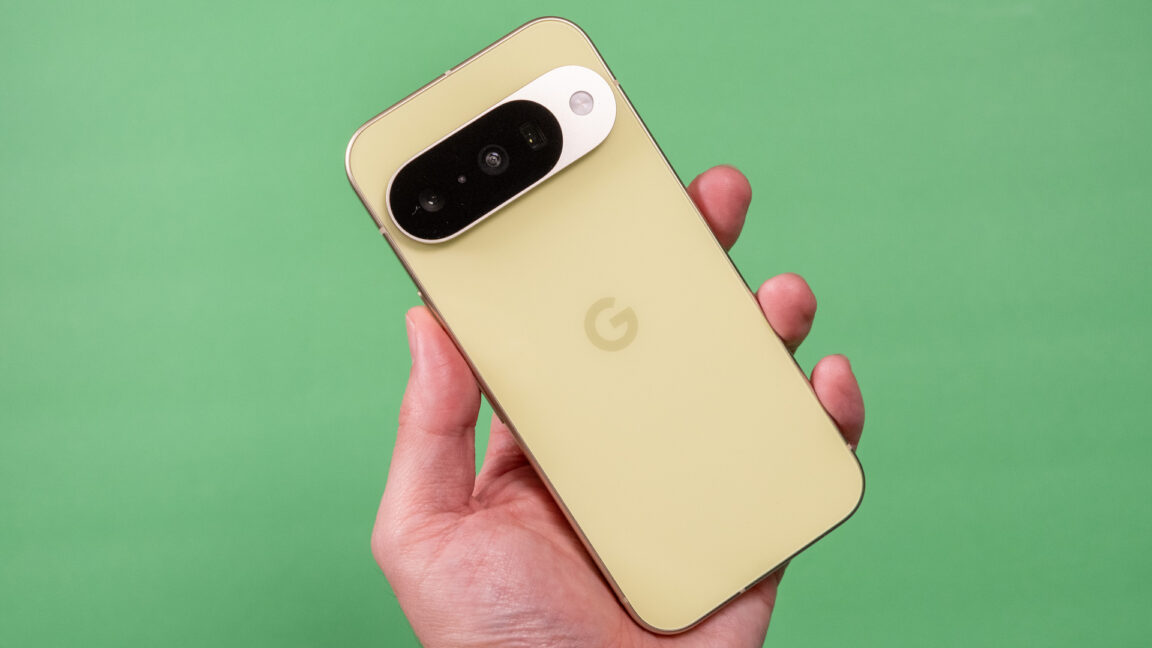
We saw a ton of cool new products at CES 2026, but not all of them made the cut when it came to deciding what was best of show. One of those products that we nevertheless think holds promise is Anker’s AeroFit Pro 2, which are wireless earbuds that can double as open-ear headphones. You pick the mode you want: wedge them into your ears for better sound enhanced by active noise cancellation, or let them pump out sound near your ears so that you can keep stay tuned into your surroundings. By using the code WSTDA3875US at Anker’s site, you can knock $30 off their $179.99 price. Anker Soundcore AeroFit Pro 2 Where to Buy: $179.99 $149.99 at Anker The AeroFit Pro 2 have an ear hook design, which could make them a great fit for working out. They contain sensors that can determine how you’re wearing them and adjust features accordingly. They can recalibrate the EQ, and in earbud mode, turn on active noise cancellation by way of their six built-in microphones. However, as our announcement post mentioned, I wouldn’t expect ANC that can rival the category’s flagship products from Bose, Sony, or Apple. Other Verge-approved deals for your consideration Donkey Kong Bananza is one of 2025’s best video games and one of the Switch 2’s best titles. Discounts on the game are rare, so if you’ve been considering it, consider hopping over to Walmart or Amazon where you can buy the physical cartridge version for $62.99 instead of $70. Bananza was made by the same development team within Nintendo responsible for Super Mario Odyssey, which should be all the convincing you need to play this fun, surprisingly lengthy 3D platformer. Read our review. Most of the time, the only light that I have going in my office is the Elgato Key Light. It’s bright, its color temperature can be easily dialed in through the mobile or desktop app, and it attaches conveniently to my desk. I use it as bias lighting, aimed diagonally up toward my ceiling to diffuse the lighting evenly in the corner that I work in. If you need a powerful light to illuminate you during video calls, streams, or for any other reason, you can save 23 percent on the Key Light at Amazon, where it costs $138.99 (originally $199.99, but usually around $180 outside of a deal). B&H Photo has it for a dollar more. I see so many disposable hand warmers littered on the streets and sidewalks in NYC during the winter. More people should consider rechargeable hand warmers, like this twin-pack that costs $15.99 (originally $29.99) at Amazon and recharges via USB-C. Once fully charged, each warmer can provide warmth for four to eight hours, depending on the heat setting you choose. The two warmers snap together magnetically when you aren’t using them, and they each have a silicone wrist strap, so they won’t easily go flying out of your pocket.

The VergeJan 9, 2026, 04:04 PM

In most countries, imports from China account for less than 10% of GDP, even where China is the top partner

In most countries, imports from China account for less than 10% of GDP, even where China is the top partner

This Data Insight is the third of a three-part series on China’s role in global trade, drawing on new writing we added this week to our Trade and Globalization topic page.China is the top source of imports for many countries. But this tells us only how China compares with other trading partners, not how large these imports are relative to the size of each country’s economy. That is what this map shows.The map plots the total value of merchandise imports from China as a share of each importing country’s GDP. The data shows that Chinese imports are relatively small when compared with the overall size of the importing economy.Take the Netherlands as an example: China is the country’s leading source of imports. But compared with the size of the whole Dutch economy, this is a comparatively small amount — about 10% as a share of GDP. And as the map shows, the Netherlands is at the high end, largely because it imports a lot overall.In many countries, imports from China account for much less than 10% of GDP. There are a few reasons for this. First, even if China is the leading partner, most countries still import from a wide range of places. And second, in most countries, the economic value produced domestically is larger than the total value of imported goods.Read more about trade partnerships and China’s changing role in global trade.

Our World in DataDec 13, 2025, 12:00 AM
Replacing my MacBook

Replacing my MacBook

I’ve been trying to replace my MacBook. I switched from an iPhone to a Z Fold 5 (and now a Z Fold 7) which has gone well 2 years in, so I’ve been trying to do the same with my laptop. For phones, this was easier because the Samsung hardware is already better. Sadly, there’s no better laptop hardware than a MacBook, and while Asahi Linux is cool, it doesn’t work on the M3. Even on the M1, it’s missing the ability to plug an external USB-C monitor in, a key feature I use every day! Without support from Apple, I don’t see this being a viable long term solution, mostly because of Apple’s use of custom little MCUs to do everything. I bought a HP ZBook Strix Halo and a Framework 16. I’ve been daily using the HP, the Framework gets here hopefully this week and maybe I’ll stream it when I get it. I’ve been running Omarchy which I have been quite happy with. It fixed the problem I always had with Arch, which is how customizable it is. It’s a great OS (why isn’t apt-get multithreaded yet?), leave the customizability there, but pick some good defaults with taste. The main issue I have with Linux laptops is power management. I got idle lid-closed power down to 0.2W with the help of AMD’s awesome amd_s2idle script. This is similar to a MacBook, and is 15 days in a bag. Lid-open power has been more of a challenge. I wrote a script to poll the best sensors I could find as fast as I could. I got CPU draw from the SMU and battery draw from the bytes of whatever it is the EC is. Embedded Controller? I couldn’t get the ACPI battery draw to update faster than every 30 seconds, but the EC has it every second in its bytes. Btw, LLMs are super helpful at reverse engineering – it’s almost becoming fun again. After tuning, at screen-on idle, the whole laptop draws 7W, and when browsing the web more like 10W. That’s only 7 hours of life, which is 30% of a MacBook, and still not really acceptable. 4W of those 7W are the CPU. Strix Halo is the only laptop chip that rivals the Apple M-Series, actually having decent cores (the AVX-512 is real too) and good RAM bandwidth. Sadly it’s chiplets, which the LLMs tell me are very power hungry. I tried to further power limit the CPU with RyzenAdj, but I couldn’t even get it to 3W with a stated limit of 2W. I wonder if there’s some other ways to do it, what more can I turn off? The main fix for s2idle was turning off the webcam, what else is on and wasting my CPU (well, really APU) power? AMD, want to release docs about the power draw of Strix Halo? You could probably figure out a lot through experiments too, but then I have to, like, disable the GPU over ssh and then I have to get another laptop and that all sounds like a lot of work. I’m already busy trying to build an open source rocprof-trace-decoder. Also, package Strix Halo with MoP like Apple. it’s the best thing about PoP (low power) without the worst thing about PoP (bad thermals). That picture is Intel Lunar Lake, and you know MoP is a good idea because Intel is discontinuing it while Apple keeps doing it. For the other 3W, this is on HP. The OLED screen is about a watt, which is really good. Don’t turn on the stupid keyboard backlight that draws 2 watts! The memory is probably about a watt too, you can’t really turn it off to measure. I couldn’t find a way to lower the clocks either. That leaves 1 watt of possibility. The WiFi and NVMe are both extremely low power. Any other ideas? I bet there’s something stupid or poorly designed, HP should release a schematic of the laptop. In fact, you don’t need to release a full schematic, just a block diagram. Framework releases these and just showing what parts are used and how they are connected is 80% of what you want. If the CPU could be brought down to 2W (Apple M3 Max is 1W!) and the laptop brought down to 2W, with a 99.6 Wh battery that’s 25 hours. If someone makes one of these in a nice 16” form factor, OLED screen, aluminium unibody, no stupid branding everywhere, I think it might be time for a lot of developers to switch.

The Singularity is nearerNov 28, 2025, 05:00 AM
China’s fertility rate has fallen to one, continuing a long decline that began before and continued after the one-child policy

China’s fertility rate has fallen to one, continuing a long decline that began before and continued after the one-child policy

The 1970s were a decade shaped by fears about overpopulation. As the world’s most populous country, China was never far from the debate. In 1979, China designed its one-child policy, which was rolled out nationally from 1980 to curb population growth by limiting couples to having just one child.By this point, China’s fertility rate — the number of children per woman — had already fallen quickly in the early 1970s, as you can see in the chart.While China’s one-child policy restricted many families, there were exceptions to the rule. Enforcement differed widely by province and between urban and rural areas. Many couples were allowed to have another baby if their first was a girl. Other couples paid a fine for having more than one. As a result, fertility rates never dropped close to one.In the last few years, despite the end of the one-child policy in 2016 and the government encouraging larger families, fertility rates have dropped to one. The fall in fertility today is driven less by policy and more by social and economic changes.This chart shows the total fertility rate, which is also affected by women delaying when they have children. Cohort fertility tells us how many children the average woman will actually have over her lifetime. In China, this cohort figure is likely higher than one, but still low enough that the population will continue to shrink.Explore more insights and data on changes in fertility rates across the world.

Our World in DataNov 27, 2025, 04:00 AM
Seasonal flu kills about 700,000 people each year across the world

Seasonal flu kills about 700,000 people each year across the world

Seasonal influenza is sometimes seen as a mild illness, but it remains a major cause of death. In serious cases, it can cause deadly complications such as pneumonia, strokes, and heart attacks. Researchers estimate that the flu causes about 400,000 respiratory deaths and 300,000 cardiovascular deaths globally each year.The flu is most dangerous for infants and older adults. The map here shows rates of respiratory deaths caused by the flu in adults aged 65 and over, averaged across 2002–2011 (excluding the 2009 Swine Flu pandemic).The data shows that death rates tend to be higher in South America, Africa, and South Asia than in Europe or North America.I come from South America, and I found this surprising: most of what I hear about flu deaths tends to come from richer countries in the Northern Hemisphere. But the map shows that the flu is also deadly, in some cases even more so, in other regions where poverty, worse underlying health, limited access to healthcare, and lower vaccination coverage contribute to higher mortality.One explanation for my misperception might be that surveillance and reporting are stronger in the countries that I associate with deaths from flu. Another could also be age differences: people in high-income countries tend to be older, so their total number of deaths — the ones you actually hear about — may still be higher, even if rates are lower.When you consider the total death toll, you realize that the numbers are very large on the whole. Recall that the map only includes respiratory deaths, so the overall mortality is actually higher if we include other flu-related complications like cardiovascular disease.Even if you account for the uncertainty of estimates in low-income countries — due to limited testing and death registration — the overall pattern remains striking: seasonal influenza kills hundreds of thousands each year, with many of these deaths in South America, Africa, and South Asia.Read more in our article, “How many people die from the flu?”

Our World in DataNov 25, 2025, 04:00 AM
the solution is simple but you aren’t demoralized enough yet

the solution is simple but you aren’t demoralized enough yet

I watched Legally Blonde (2001) today and it’s so quaint to see a time when people basically trusted the system. She goes and works at a “prestigious law firm” like this is some kind of victory, but in reality the whole system was a huge circlejerk. I toured a bunch of Chinese factories last week. One was installing 100 new CNC machines, and there was no hype or secrecy around it. They straight up told me it was $20k a machine. These sort of vibes. “I’m gonna tell you what I’m doing, and you can try to compete, but I’ll still crush you.” And I believe them. As cheap as comma is and as much as we love vertical integration, we are going to continue to work with that factory. The big question: are most people in America productive or unproductive? If it’s the former, why can’t we solve this with democracy? Jail for the cronies and rent-seekers, wireheading city for the homeless, and no more medicare or social security. But I fear it’s the latter: 73.9 million people are on social security. There’s 258 million people over 18 in the US, so 28% of voters are on the take. And that’s just one group of the unproductive. There’s everyone who is working in made up fake systems where both sides ratchet up complexity when really the whole thing should go away. I think the most people are unproductive ship has sailed. America got 51% attacked. A democracy will continue to exist up until the time that voters discover that they can vote themselves generous gifts from the public treasury. From that moment on, the majority always votes for the candidates who promise the most benefits from the public treasury, with the result that every democracy will finally collapse due to loose fiscal policy, which is always followed by a dictatorship. Can we get a good dictator and not a South America style one? America (people like Elon and Jensen, who are both first-generation immigrants btw) can rival China, partically if we can attract talent from all over the world, but not if this clown show continues. Everyone does understand that productive capacity is how wars are won and lost, right? Would you bet on 100 CNC machines or 100 lawyers?

The Singularity is nearerOct 19, 2025, 04:00 AM